Role
Lead Product Designer
Timeline
Jan 2024 - Mar 2024 (3 months)
Responsibility
End-to-end UX/UI design
Enterprise SIM Ordering
Simplifying multi-region complexity through modular design

In 2024, Console Connect expanded to offer flexible eSIM plans from multiple connectivity providers.
Our strategy was to repackage provider networks into regional plans without disclosing provider identities — creating sourcing flexibility but also a unique design challenge.
I led the redesign of the Enterprise SIM Ordering journey, creating provider-agnostic patterns that prioritised transparency and scalability while helping enterprise admins configure complex plans confidently.
Project Outcome
Designed a new modular pricing modal that accommodates multiple regional plans with zone-based pricing
Achieved 90% task completion in usability testing for key ordering tasks
Enabled business to expand regional coverage and pricing models through scalable design patterns
The Problem
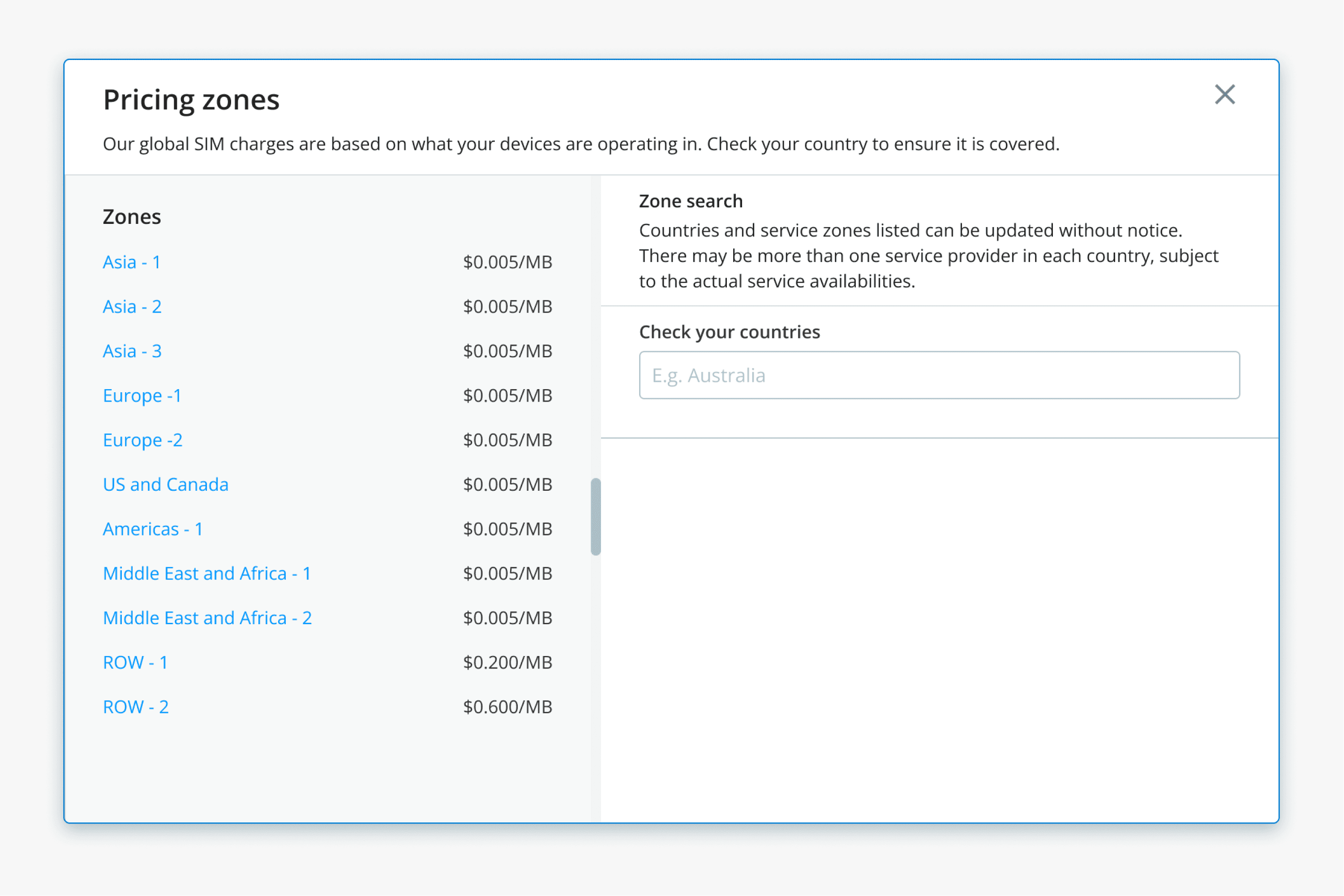
A single-plan design that couldn’t scale
As new providers joined the platform, the business needed to hide provider identities while combining networks into regional offerings — introducing variation in coverage, zone-based pricing, and eligibility rules.
Without this context, admins couldn’t answer basic questions like “Why is this plan more expensive?” or “Does this work in Germany?”. The challenge was clear: make complex, usage-driven pricing transparent in a system where the provider must stay invisible.
The existing modal, built for one global plan, simply couldn’t scale to support these emerging regional variations.
The Challenge
Designing in the dark, but making it bright for users
The system needed to:
Support multiple regional plans without redesign
Clarify complex pricing while keeping providers anonymous
Adapt to new regional and usage-based models that didn’t yet exist
The biggest challenge was designing for uncertainty — creating a flexible structure for pricing models the business had not fully defined at launch.

User Research
Understanding the constraints and the users
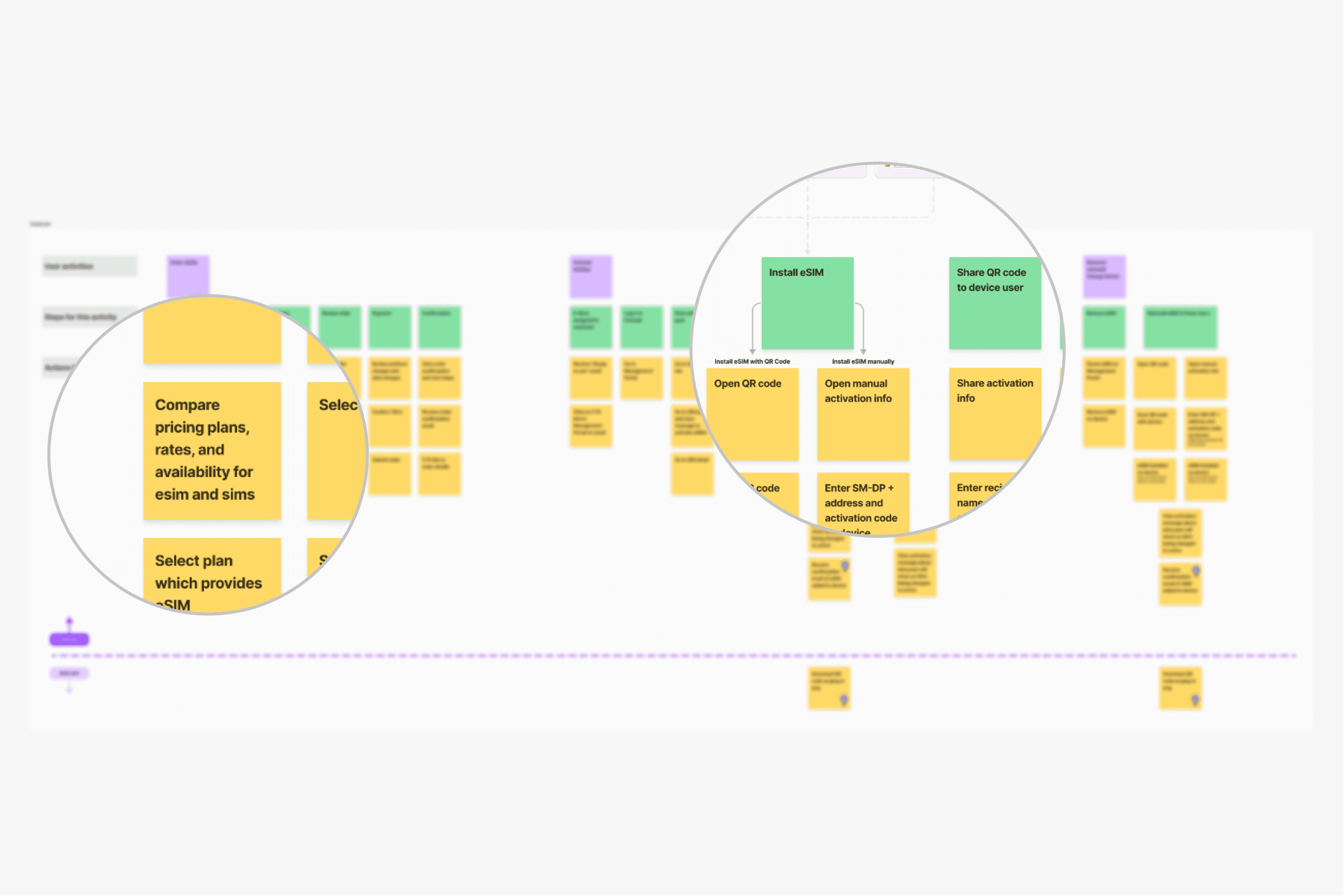
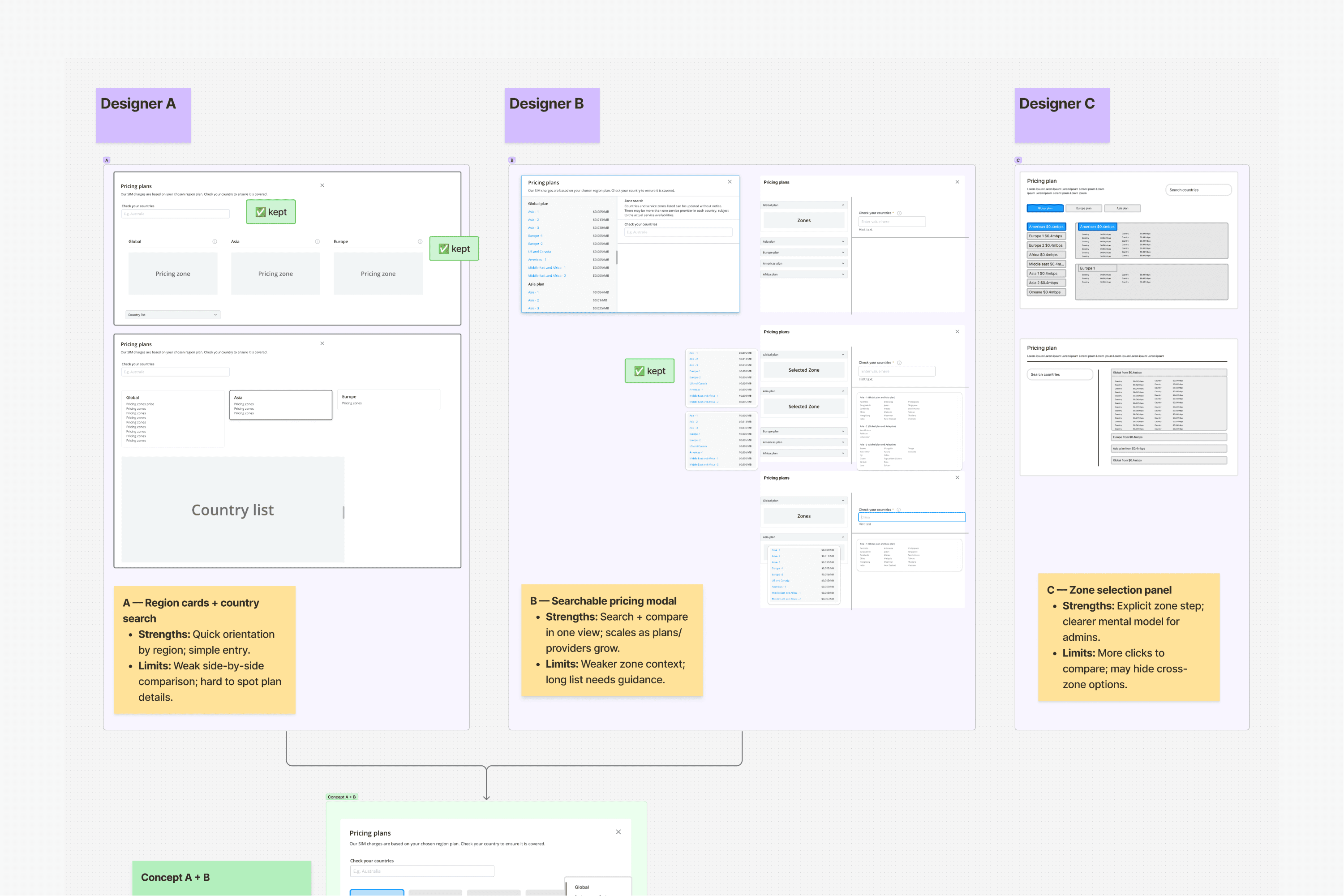
I led all research and validation activities across stakeholder interviews, design workshops, and usability testing. Early discussions with PMs, Sales Ops, and Support clarified the business need for provider anonymity and the constraints it introduced. Testing showed how admins compared plans and assessed coverage, highlighting the need for a clearer hierarchy and progressive disclosure. These insights led leadership to pursue a full redesign rather than incremental updates.

Cross-Functional Alignment
Aligning teams around a scalable model
A key part of the project was creating clarity across teams. I aligned PMs, Sales Ops, Support, and Network teams on how regional plans, zone rules, and provider anonymity should work, establishing the logic behind the redesign and removing early ambiguity.
As pricing models evolved, I introduced modular patterns that could absorb new regions and usage-based variations without redesign. This reduced engineering effort and gave the business a faster path to launch new plans.
I also delivered detailed specifications for complex pricing scenarios, ensuring a smooth handoff and lowering long-term maintenance costs. These foundational decisions turned a complex, provider-agnostic model into a predictable ordering experience.

The Solution
Modular comparison and smart filtering for clarity at scale
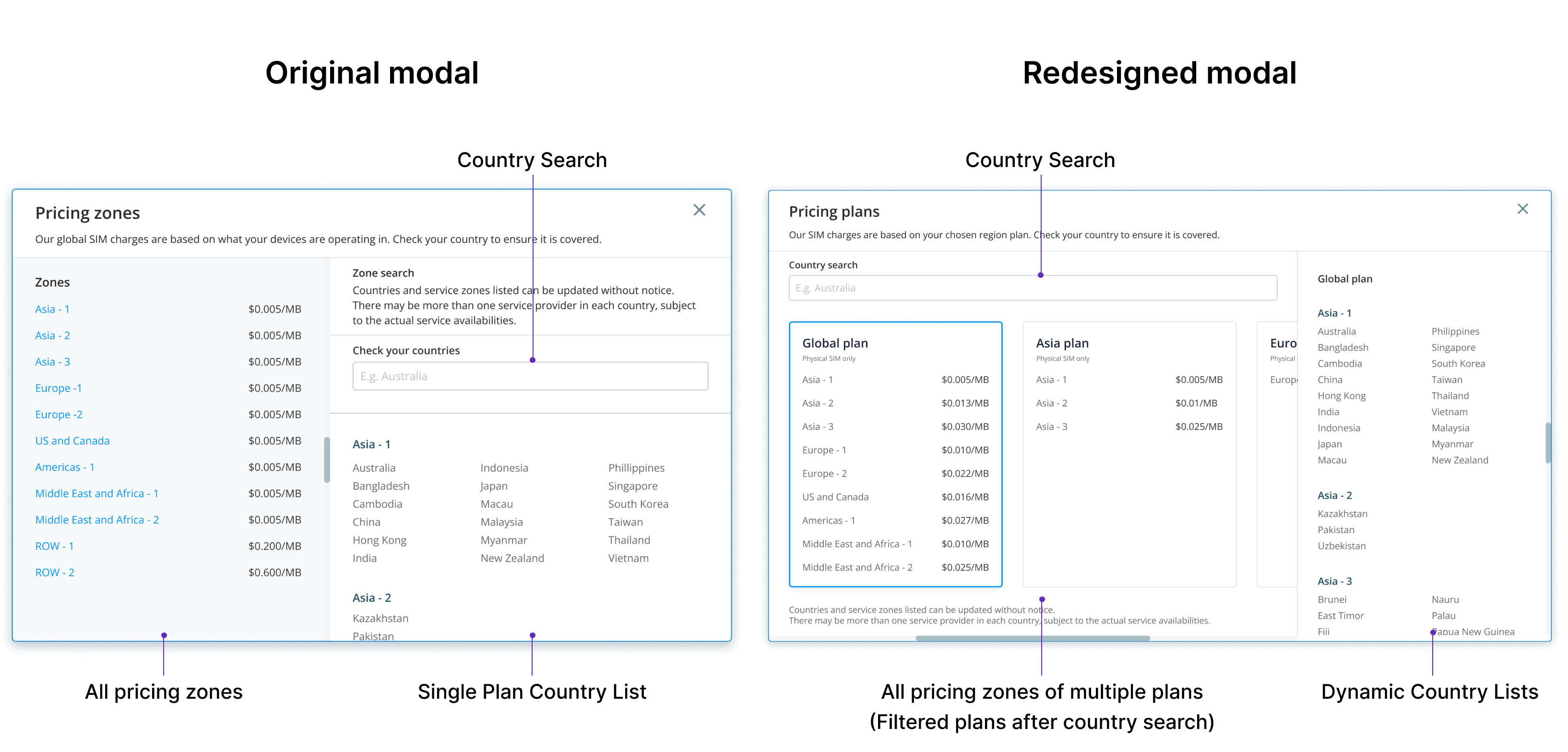
We replaced the single-plan layout with a flexible, provider-agnostic comparison model.
Side-by-side plan comparison
Regional plans displayed side-by-side, making cost and coverage differences easy to interpret. A horizontally scrollable modal allowed the layout to scale as new plans were added.
Country-based filtering
Admins could search by country to instantly surface relevant plans, reducing cognitive load and improving evaluation speed.
Progressive coverage details
Detailed coverage opened in a floating panel, preserving clarity in the main view while supporting deeper exploration on demand.
Results
Meeting business and user goals through modular design
The redesigned experience performed strongly in testing, with more than 90% of admins completing key tasks and navigating plans more quickly through clearer comparison and country-based filtering. The modular structure allowed the business to add new regional plans and pricing models with minimal rework, supporting faster expansion and reduced complexity for both design and engineering. The solution integrated seamlessly with the Console Connect design system and provided a scalable foundation for future regional growth.
Reflections
Designing for what you can’t predict
This project highlighted the value of designing for scale and clarity under ambiguity. Modular patterns absorbed new regional and usage-based variations without additional redesign. Country filters and comparison tools made complex pricing manageable, while early cross-functional alignment prevented downstream rework.
The result is a transparent, extensible enterprise UX framework that supports a provider-agnostic business model and future growth.